
The Greater Boston Investor's Guide

A practical framework for evaluating, buying and managing multi-family property in one of the country's most supply-constrained rental markets.

Why Boston Keeps Rewarding Patient Investors

Boston's appeal comes down to structure. Land is scarce, the workforce is highly educated and well paid, and students and medical professionals keep tenant demand steady. In 2026 those fundamentals still hold, but the way to win in this market has changed. This guide covers the metrics, property types and neighborhoods that matter most, whether you're buying your first two-family or adding to an established portfolio.

The Market Fundamentals Behind the Opportunity

Below 5.5%
Boston multifamily vacancy
$3,000+
Typical monthly apartment rent
35+
Colleges and universities
150,000+
Students each year

What Sets Greater Boston Apart From Other U.S. Markets

Chronic undersupply

Decades of underbuilding keep inventory well below historical norms, which keeps vacancies low and rental income steady.

A diverse tenant base

Students, the Longwood Medical Area, the Kendall Square biotech corridor and the downtown financial district all draw renters, so no single sector carries the market.

A record of appreciation

Well-located triple-deckers in Dorchester, Jamaica Plain and Somerville have built significant equity over the past decade.

Rents that support the price

Rents rank among the highest in the country, which gives investors the gross income needed to justify premium purchase prices.

Cap Rates by Asset Class: Knowing What You're Paying For

Stabilized: 4% to 4.75%

Updated, well-located buildings at full occupancy. Cash-on-cash returns are lower, and investors are mainly buying stability and appreciation.

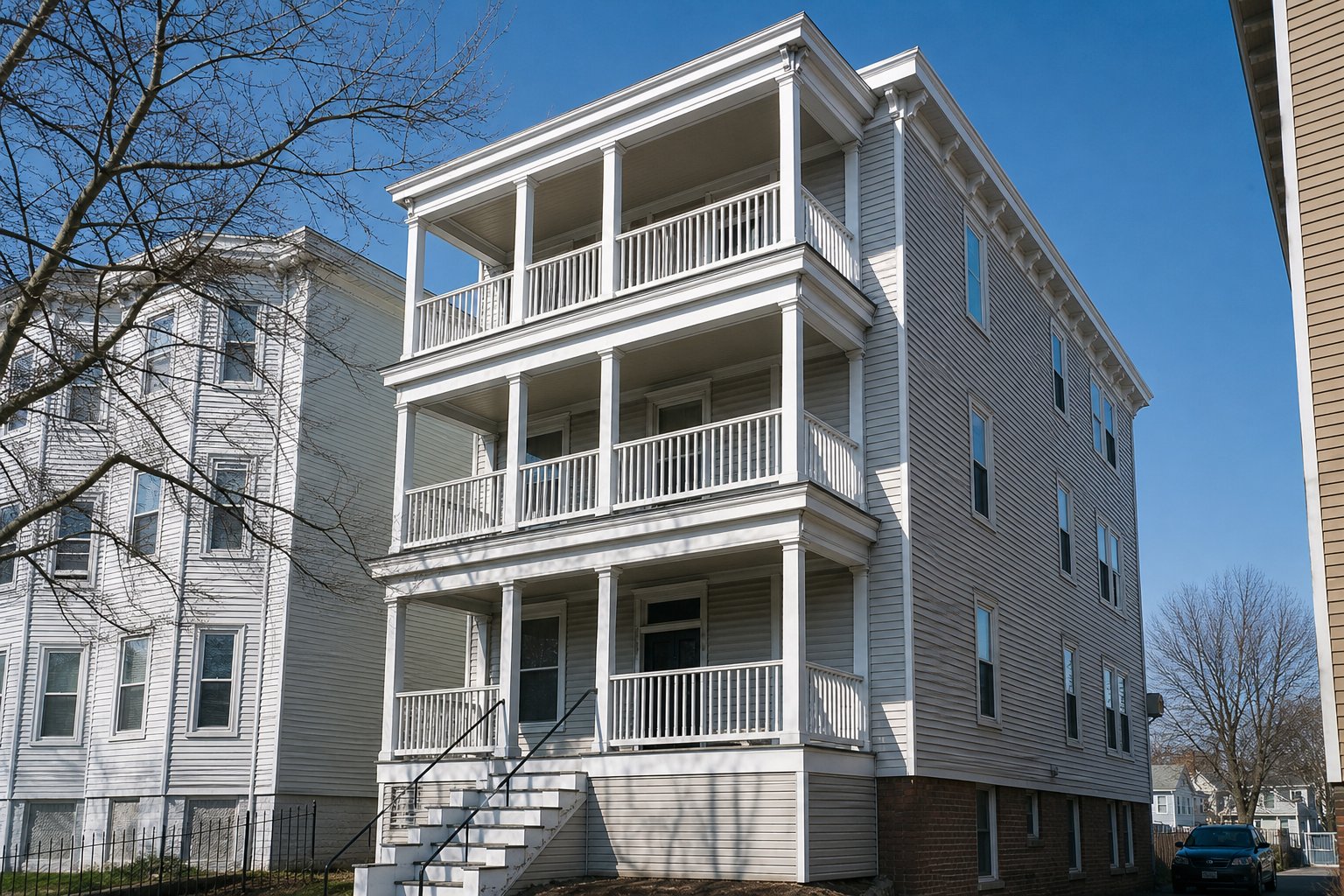
The Triple-Decker: Boston's Original Investment Vehicle

Three Units, Three Income Streams

Three Units, Three Income Streams

Most of Boston's triple-deckers were built between 1880 and 1930, and they're still one of the easiest ways for private investors to get into the market.

  • Owner-occupied financing: Living in one unit of a 2-to-4-unit property qualifies it for residential financing, including FHA loans with as little as 3.5% down.
  • Strong gross income: A fully rented triple-decker can bring in $7,500 to $10,000+ a month in gross rent.
  • Room to raise rents: Bringing units up to market rent as tenants turn over can lift a 4.5% entry cap rate to 6.5% or more within 3 to 5 years.
  • Condo conversion as an exit: Many triple-deckers can be converted into three separate condominiums.

Five Questions to Answer Before Any Acquisition

A Disciplined Evaluation Framework

A Disciplined Evaluation Framework

  1. Current vs. achievable NOI: The gap between today's rents and market rents is often where the opportunity is.
  2. Review the roof, mechanicals, foundation and building envelope, then budget for what they'll need.
  3. Neighborhood trajectory: Look at permit activity, transit investment, school trends and price momentum.
  4. DSCR under stress: Lenders typically require at least 1.25x. Test the deal at today's rate of about 6.4% and again at 1% to 2% higher.
  5. A viable exit: Whether you plan to hold, refinance or convert, the purchase price has to support the exit.

Remember: the highest cap rate isn't automatically the best deal. Over a 7-to-10-year hold, a well-bought 5% cap in an appreciating area often beats a 7% cap in a declining one.

Investor Questions, Answered

Ready to Evaluate Your Next Boston Investment?

Let's go through the numbers, the neighborhood and your exit strategy together before you make an offer.

Schedule a Consultation